Written in collaboration with:


Hiring the right talent starts with attracting the right talent. In today’s competitive tech market, it’s more important than ever to understand what tech professionals actually want, and what keeps them around. Instead of guessing, use the data. Of which, there is plenty. For nearly fifteen years we’ve been tracking data on candidate expectations and helping companies improve their candidate experience.
In our recent event with recruitment and talent advisory specialists Amby, we explored data-backed insights into candidate experience in tech hiring and shared actionable strategies for closing the gap between what candidates expect and what employers deliver.
Why candidate experience matters in tech recruitment
Tech candidates are some of the most in-demand professionals on the market — and they know it. Research shows that 54% of tech candidates are active in multiple recruitment processes at once. That means speed, clarity, and transparency in your hiring process can be the difference between winning and losing top talent.
Yet one in four candidates never receive feedback after an interview. For many, that’s reason enough never to apply again. And when they share their experience with their wider network, it can quickly create a ripple effect that damages your employer brand.
Key trends shaping candidate expectations
The candidate experience encompasses all aspects of the candidate interaction with your company, from the career page to the final offer and pre-onboarding. While every touchpoint should be optimized, none of it matters if candidates can’t get past a complicated application process. In fact, around 60% of applicants drop out of applications if they’re too long or complex. That’s a major leak in your pipeline, turning away talent before they’ve even had the chance to apply.
Several broad trends are reshaping how candidates, especially Gen Z, evaluate employers:
Value alignment: Research is clear that Millennials, Gen Z, and the upcoming Generation Alpha are highly-value driven and want to work for companies that reflect their own personal values. This expectation goes beyond the role itself but to the company at large. Today’s talent looks for employers who act on their values and take real responsibility for causes that matter.
Transparency: Candidates expect openness about the role, company culture, and pay. They want a clear picture of what the job actually entails and genuine insights into company culture, ideally from employees beyond the hiring manager. They are looking for clarity before they commit. Pay transparency is a growing expectation, and with the EU Pay Transparency Directive on the horizon, this is no longer optional.
Communication and feedback: Candidates want more personal, timely communication. This has topped the candidate wishlist for a while, but evidence points to employers still falling short in this area. Historically, providing individual feedback has been time-consuming, but with automation tools, it’s no longer an unreasonable expectation. Consistent, human communication throughout the process can be the difference between engagement and drop-off.
So, what do candidates really care about?
While these trends show where expectations are heading, the data gives a clearer picture of what candidates actually prioritize. From nearly 600,000 Trustcruit responses, three factors stood out as most important when choosing a new employer:
- Career growth and development
- The role itself (tasks and responsibilities)
- Compensation and benefits
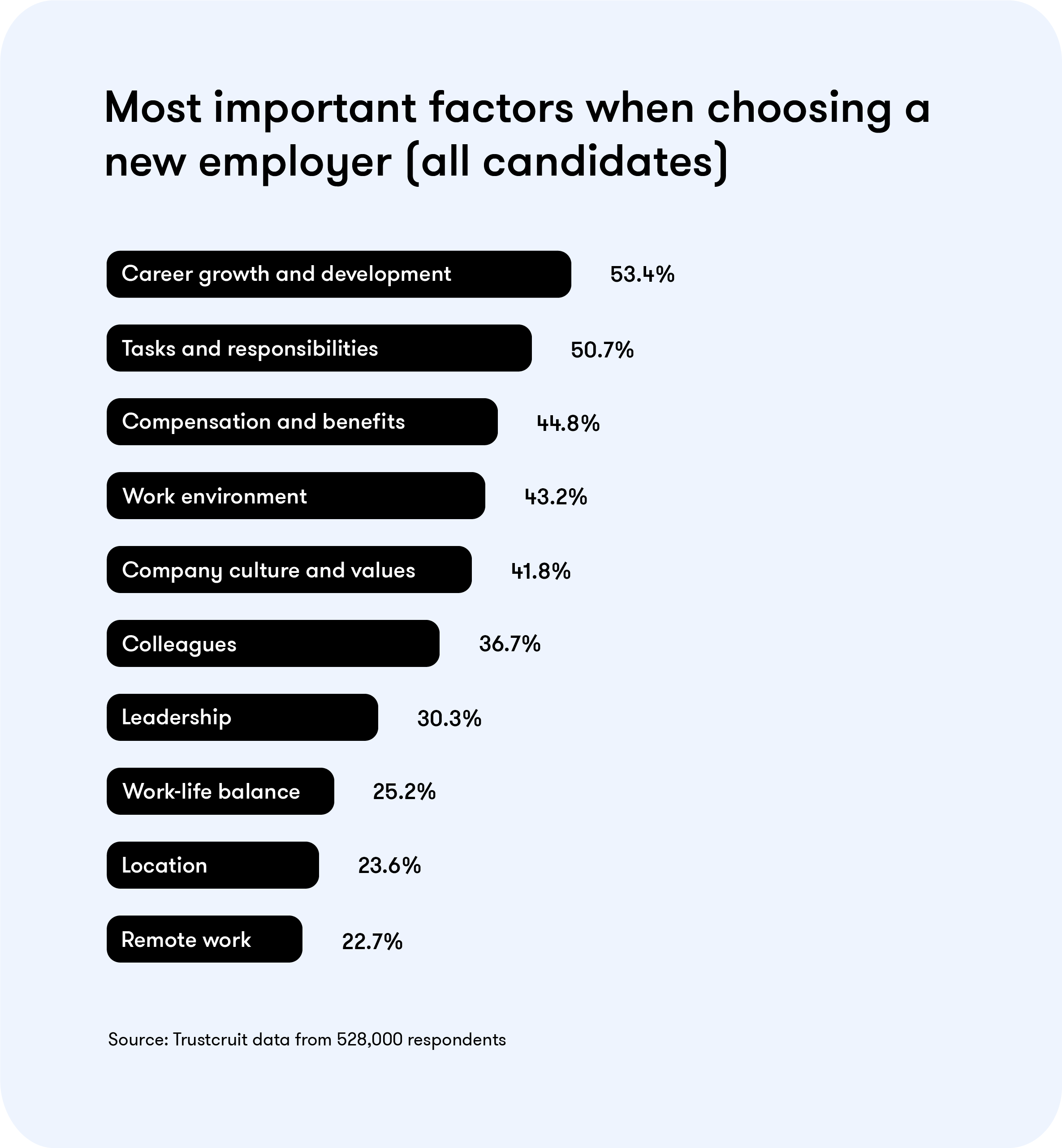
Interestingly, work-life balance and remote work ranked lower on the list, suggesting that clarity about the role and future growth opportunities matter most to candidates. For tech talent specifically, however, the rankings looked a bit different. The top three were:
- Company culture and values
- Career growth and development
- Compensation and benefits
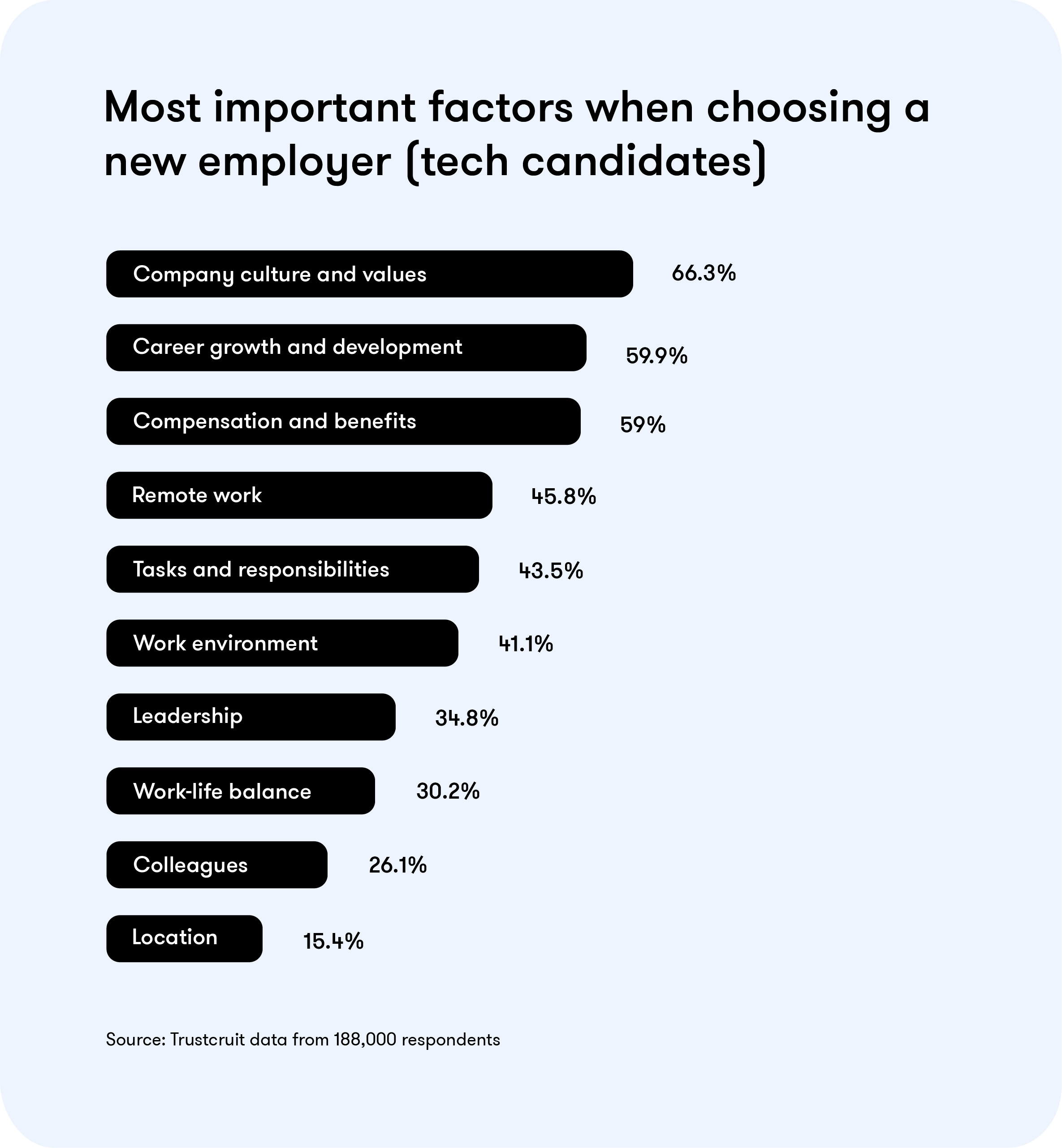
For tech candidates, company culture and values ranked as the most important factor. Interestingly, compared to the general candidate population, remote work jumped from least important to fourth most important. When designing employee value propositions (EVP), it's clear that they need to be tailored to the target demographic and generic EVPs won’t work.
How to bridge the gap: strategies for employers
For companies looking to secure tech talent, it helps knowing what actually works. Research from Amby points to several strategies for closing the gap between candidate expectations and employer efforts.
Build and live your employer brand
Your employer brand is your bait — it’s what draws talent in. Start by defining who you are, what you stand for, and how you want to be perceived. Authenticity matters: candidates respond to real stories from employees more than polished statements.
Your EVP should be visible, credible, and lived every day, not just written on the website. Finally, tailor your messaging to the candidates you want to attract. Know what they value, how they communicate, and reflect that in your tone, visuals, and culture.
In short:
- Develop a clear employee value proposition (EVP) and deliver on it.
- Showcase employee testimonials and stories — not just on the career page but throughout job ads and the recruitment process.
- Be transparent about perks, benefits, and career paths.
Optimize the recruitment process for speed and clarity
Speed is a powerful currency in recruitment. Many companies have powerful recruitment tools already in place but aren’t using them fully. Automation and AI capabilities in your ATS, for example, can streamline scheduling, communication, and feedback. Before buying new software, maximize what you have.
Clarity matters too. Define timelines and responsibilities for both candidates and hiring managers. Even a long process feels fair when it’s predictable, and timely feedback keeps candidates engaged and your reputation intact.
Tech candidates move fast. To keep up:
- Use the tools you already have effectively — many companies underutilize their ATS or HR tech stack.
- Set clear expectations for timelines, feedback, and process steps.
- Track where candidates drop off and use data to cut bottlenecks.
Hire for potential, not just credentials
Hiring for potential means looking beyond experience to future capability. Redesign roles for where your business is going, not just who you’re replacing. Define what success looks like and separate true must-haves from nice-to-haves.
Evaluate curiosity, adaptability, and problem-solving through structured interviews or assessments. And most importantly, shift your mindset: you’re not buying ready-made talent, you’re investing in people who can grow with you.
The future of work requires new skills, so not all candidates will tick every box today or have experience that perfectly aligns.
Forward-looking employers should:
- Focus on skills like learning agility, problem-solving, resilience, tech literacy, and curiosity.
- Replace “copy-paste” job ads with forward-looking descriptions of success in the role.
- Use skills assessments and scenario-based interviews to evaluate growth potential.
The bottom line
Bridging the gap between candidate expectations and employer perceptions requires more than just small process tweaks. It demands a cultural shift — greater transparency, faster communication, stronger employer branding, and a focus on potential over perfection.
For tech hiring in particular, where competition is fierce and expectations are high, companies that can adapt will not only attract top talent but also build the trust and loyalty that keeps them.
This article was co-created by Jobylon and Amby to share insights and best practices for HR and talent leaders.